Drop-in replacement
Colorless PI replaces traditional amber PI while maintaining comparable mechanical strength and environmental resistance. Existing core assembly steps do not require redesign or revalidation.
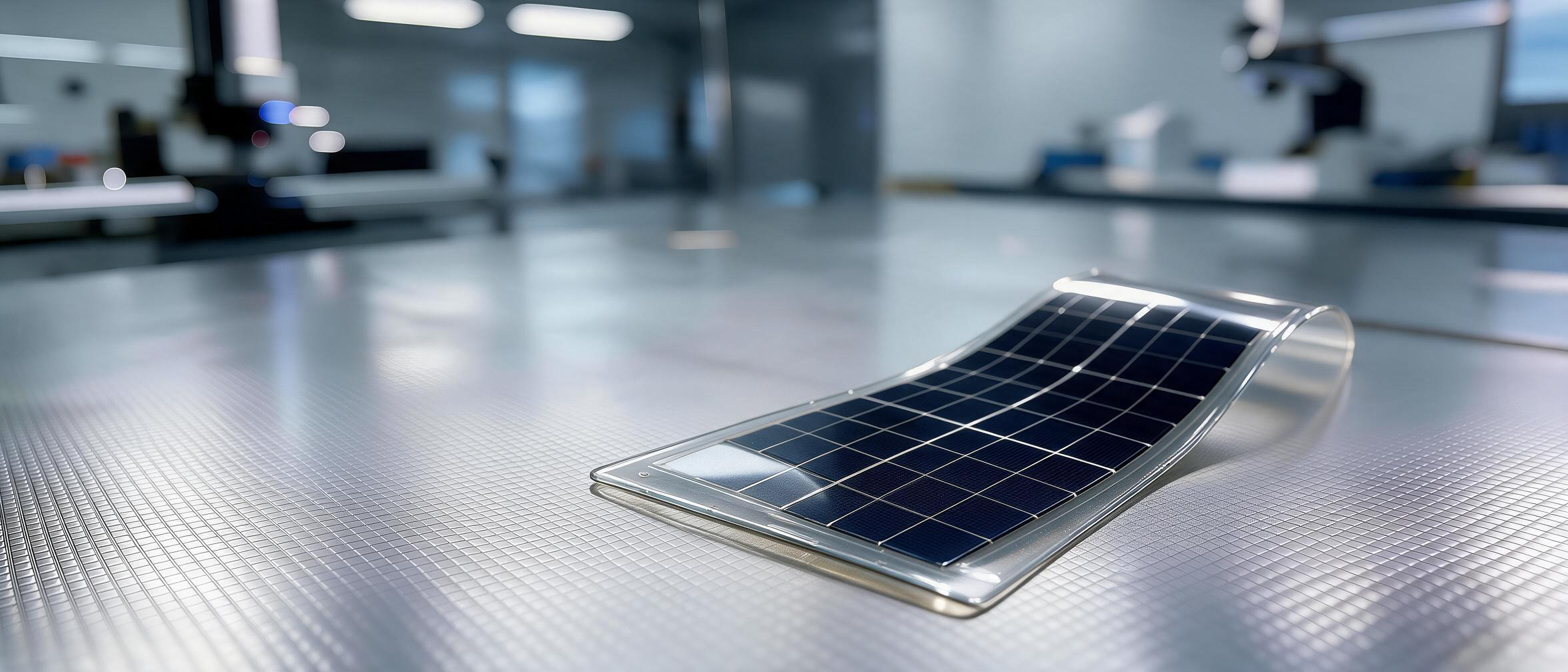
Bifacia™ colorless polyimide
A high-performance patented proprietary colorless polyimide solar-cell substrate engineered as a direct drop-in replacement for traditional amber PI—with the mechanical strength and environmental resistance needed for bifacial solar applications.
The Bifacia advantage
Bifacia™ preserves the established manufacturing logic of polyimide substrates while opening the rear side of a bifacial cell to reflected light and reducing solar heat absorption.
Colorless PI replaces traditional amber PI while maintaining comparable mechanical strength and environmental resistance. Existing core assembly steps do not require redesign or revalidation.
By transmitting Earth-reflected light to the rear side of a bifacial cell, Bifacia™ can enable up to 23% additional power in LEO compared with equivalent monofacial panels.
Lower solar absorption can reduce cell operating temperature by up to 10°C, supporting higher conversion efficiency and lower long-term thermal stress.
Colorless PI solar-cell substrate
Traditional amber polyimide blocks much of the useful light arriving from beneath the array. Bifacia™ allows reflected sunlight to pass through the substrate to the rear side of a bifacial cell, increasing energy yield without sacrificing process compatibility.
Application-level gain depends on orbit, albedo, cell architecture, thermal design, and stack integration. Qualification and final acceptance criteria remain mission-specific.
Review product data and applications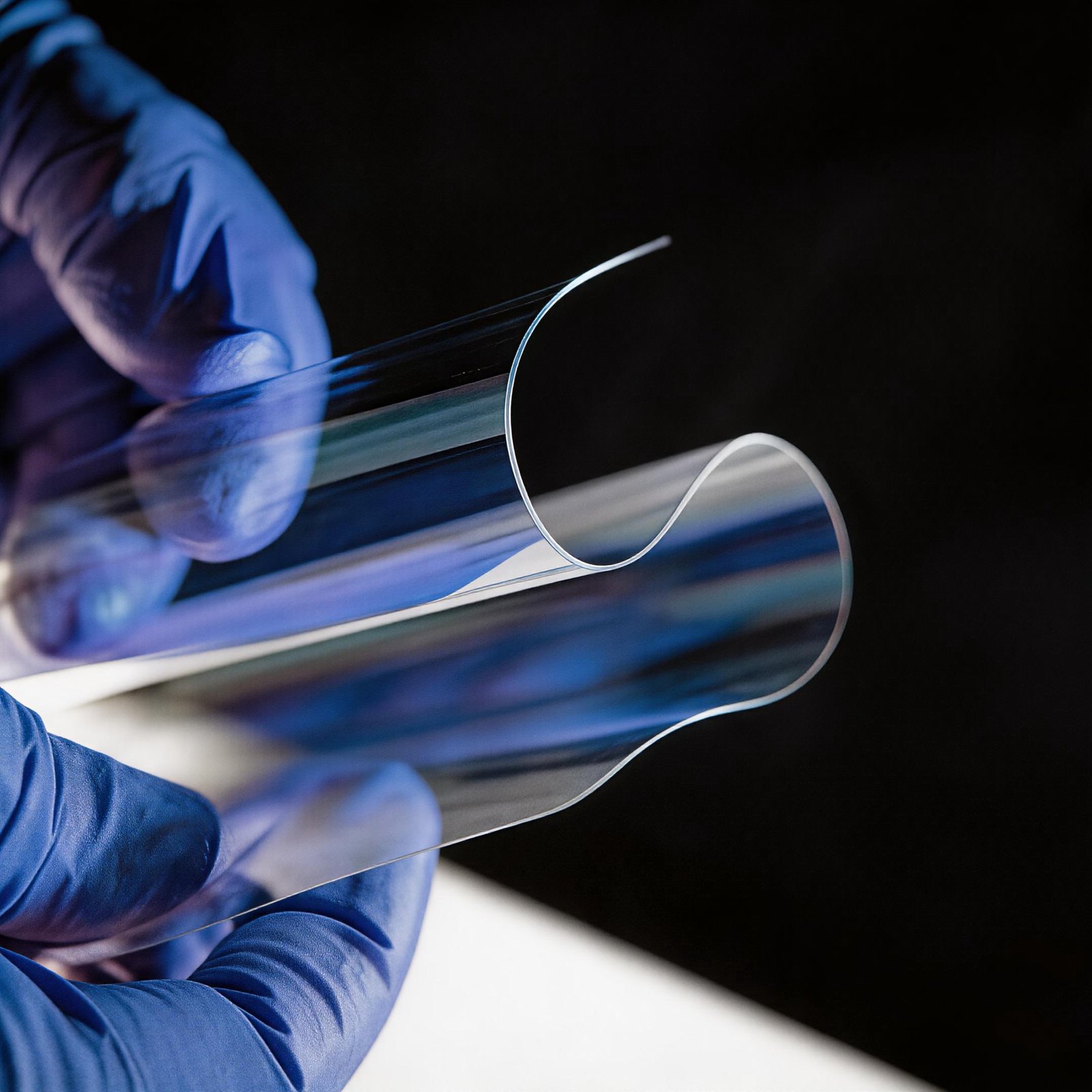
Technical snapshot

Six reference values frame early screening for optical access, mass, outgassing, thermal stability, and repeated flex.
Questions, answered
Review the core performance case, environmental screening approach, and sample process for Bifacia™ in one focused resource.
Understand peak rear-face gain, accumulated orbital energy, optical transmission, and the basis for cooler operation.
Explore performance FAQsReview the testing approach for atomic oxygen, UV/VUV exposure, thermal cycling, and proton irradiation.
Explore durability FAQsSee what mission information to provide, how sample formats are defined, and the typical timeline after specifications are agreed.
Explore sample FAQsTell us your cell platform, required thickness, dimensions, orbit, exposure environment, integration route, and sample quantity.